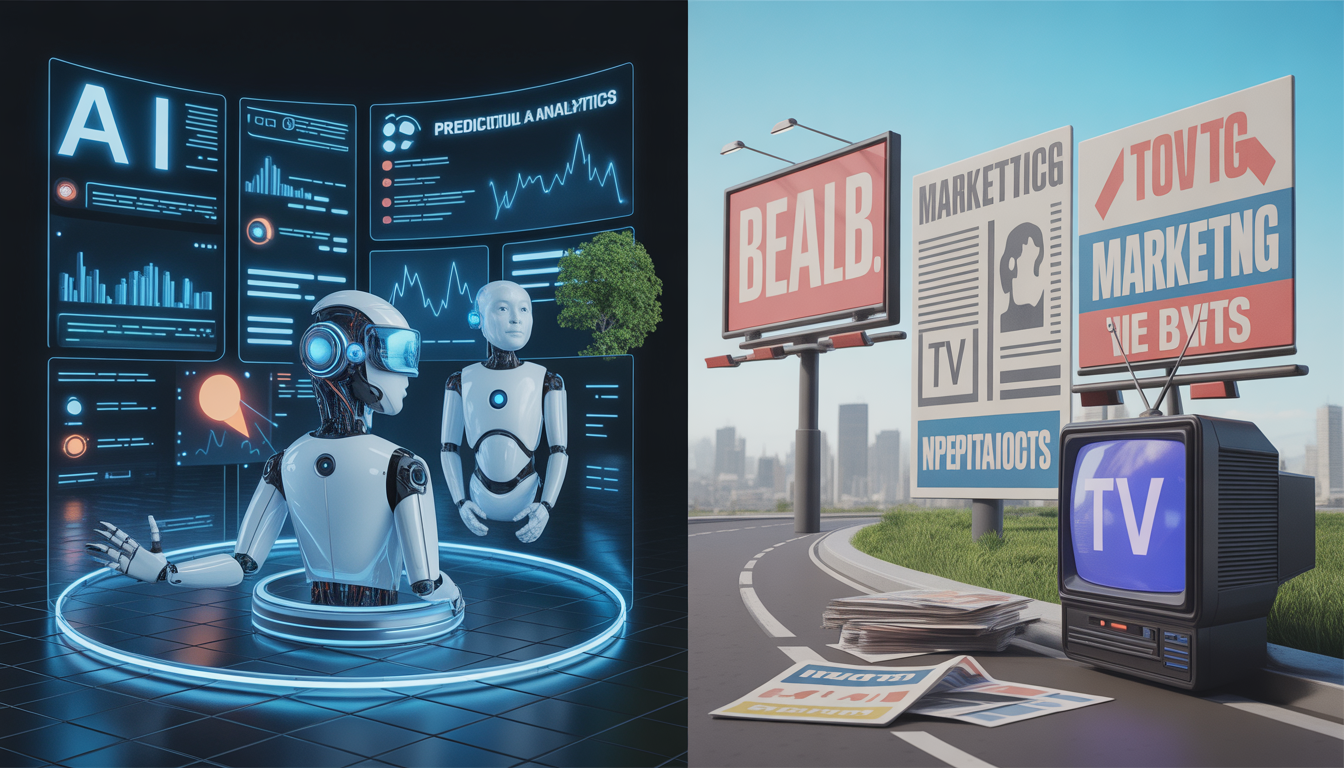
Meta Description: Explore the differences between AI and traditional marketing, their benefits, challenges, and which approach is more effective in 2026. Learn how AI can transform your marketing strategy.
Introduction
Marketing has evolved dramatically over the last decade. While traditional marketing methods like TV, radio, and print ads have dominated for decades, artificial intelligence (AI) is rapidly reshaping the marketing landscape. From personalized email campaigns to AI-generated ad creatives, businesses now have tools that can analyze vast amounts of data and optimize campaigns in real time.

This article explores the key differences between AI marketing and traditional marketing, examines their advantages and limitations, and helps you determine which is more effective for your business or website in 2026.
What is Traditional Marketing?

Traditional marketing refers to conventional advertising methods used before the digital era. These include:
- Television commercials
- Radio ads
- Newspaper and magazine advertisements
- Flyers, brochures, and billboards
- Direct mail campaigns
Traditional marketing relies heavily on broad audience targeting and creative messaging to capture attention. While it can reach a large audience, it often lacks precise targeting and data-driven optimization.
Advantages of Traditional Marketing:
- Builds brand credibility through established channels
- Works well for local and offline businesses
- Tangible formats like flyers or brochures create a lasting impression
Limitations:
- Costly, especially for TV or print campaigns
- Hard to measure ROI accurately
- Limited personalization
What is AI Marketing?

AI marketing uses artificial intelligence technologies to automate, optimize, and personalize marketing efforts. Tools like AI-driven analytics, chatbots, programmatic ads, and predictive algorithms allow marketers to target audiences more effectively than ever.
AI Marketing Tools Include:
- AI-powered email marketing platforms
- AI-generated ad creatives
- Chatbots for customer service and lead generation
- Predictive analytics for customer behavior
- Personalized content recommendation engines
Advantages of AI Marketing:
- Personalized targeting based on user behavior
- Real-time campaign optimization
- Cost efficiency by automating repetitive tasks
- Better insights from data analytics
- Scalable campaigns for global audiences
Limitations:
- Requires technical knowledge or AI tools
- Dependence on data quality
- Initial investment in AI software
Key Differences Between AI and Traditional Marketing
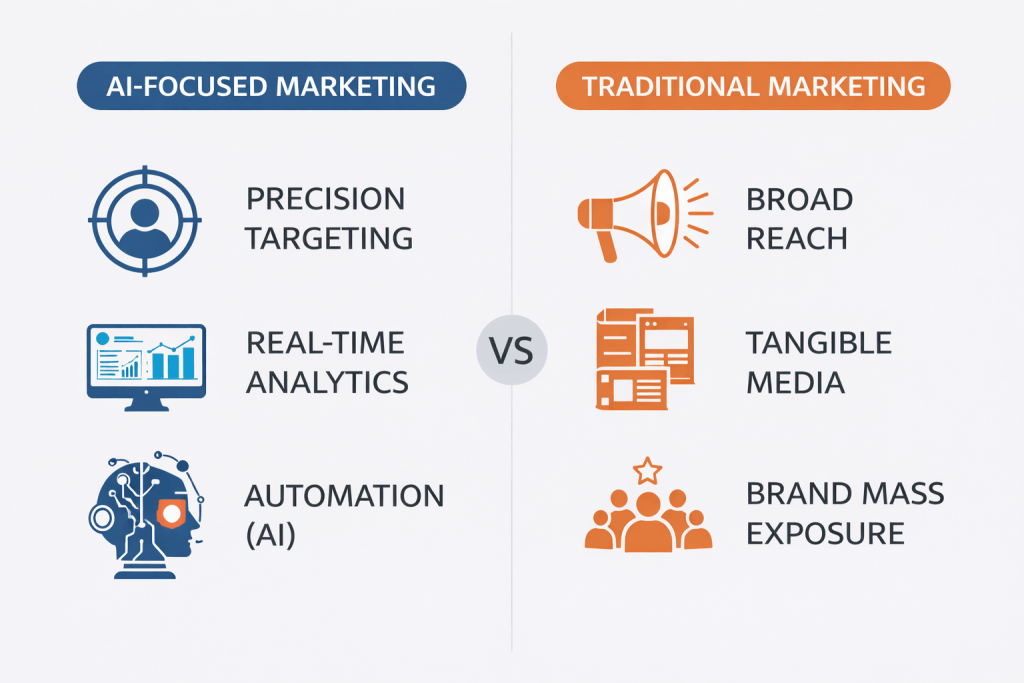
Here’s a side-by-side comparison to illustrate the differences:
| Feature | AI Marketing | Traditional Marketing |
|---|---|---|
| Targeting | Highly personalized, data-driven | Broad audience, less precise |
| Cost | Low to medium (automation reduces manual effort) | High (TV, print, billboards expensive) |
| Measurement | Real-time analytics and ROI tracking | Hard to measure; often estimated |
| Speed | Campaigns can be created and adjusted instantly | Campaigns take weeks or months to launch |
| Creativity | Enhanced by AI suggestions and insights | Depends on human creativity only |
| Scalability | Easy to scale globally | Limited by budget and media reach |
How AI is Changing Marketing in 2026

AI is no longer just a futuristic concept. Modern marketers are integrating AI into their campaigns in multiple ways:
- Predictive Analysis: AI predicts which customers are most likely to buy products or engage with content.
- Chatbots & Customer Support: 24/7 automated chat solutions increase engagement and reduce response times.
- Automated Ad Creation: AI tools generate visual ads, landing pages, and email campaigns automatically.
- Content Optimization: AI analyzes website traffic and suggests SEO improvements, headlines, and copy changes.
- Personalization: Websites and emails can dynamically adjust content for individual users based on behavior.
These tools allow marketers to achieve results faster, reduce costs, and create highly targeted campaigns that traditional marketing cannot match.
When Traditional Marketing Still Works
Despite the rise of AI, traditional marketing isn’t obsolete. Certain industries and situations still benefit from offline strategies:
- Local Businesses: Small shops, restaurants, or service providers gain more from flyers, billboards, or local newspaper ads.
- Brand Recognition: Mass media campaigns, such as TV or radio, help establish a brand image among broad audiences.
- Events & Experiential Marketing: Trade shows, live events, and product demonstrations create direct personal experiences that AI cannot replicate.
Which is More Effective: AI or Traditional Marketing?
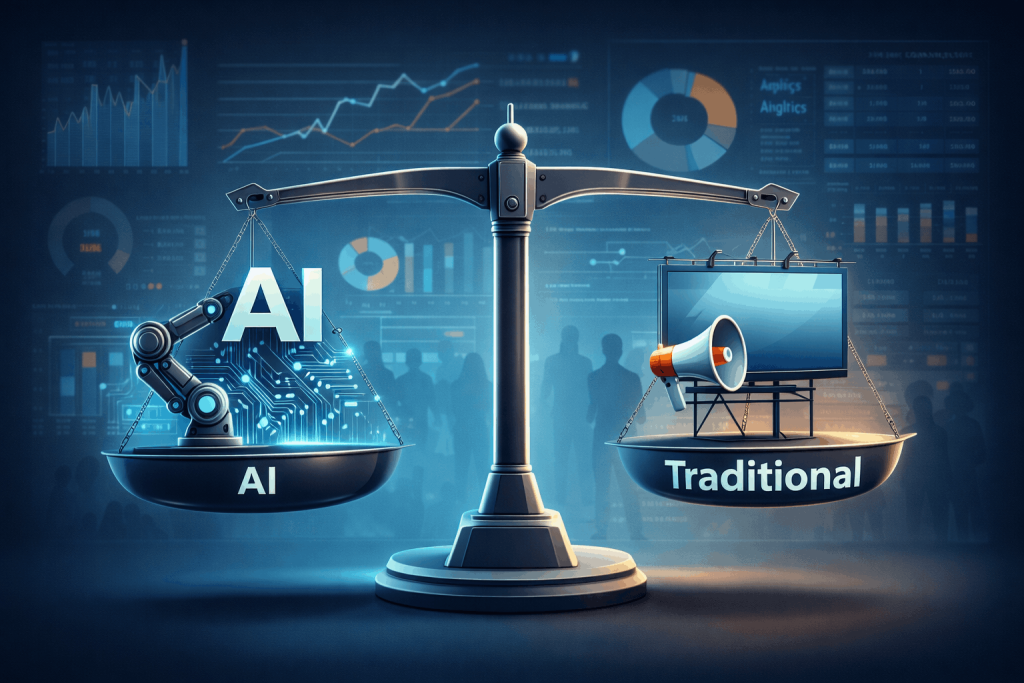
The answer depends on your business type, target audience, budget, and goals. Here’s a practical comparison:
| Goal | Recommended Approach | Reason |
|---|---|---|
| Maximize ROI | AI Marketing | Data-driven targeting reduces waste and increases conversions |
| Brand Awareness | Traditional + AI Hybrid | TV, radio, and social reach combined with digital retargeting works best |
| Local Business Growth | Traditional | Direct offline engagement often outperforms digital for local audiences |
| E-commerce Sales | AI Marketing | Personalization and predictive analytics increase online purchases |
| Customer Engagement | AI Marketing | Chatbots, emails, and social media automation maintain continuous engagement |
Conclusion: AI marketing is more effective for digital campaigns, e-commerce, and scalable growth, while traditional marketing is still valuable for local branding, large-scale awareness, and offline engagement. The best results often come from a hybrid strategy, combining both methods.
Pro Tips to Integrate AI with Traditional Marketing
- Use AI to Analyze Traditional Campaigns:
Even offline campaigns can be optimized with AI analytics. For example, AI can predict which billboard locations generate the most online searches. - Create AI-Enhanced Print Ads:
Generate QR codes or personalized offers for traditional flyers, which link to AI-powered landing pages. - Retarget Offline Leads Online:
Use AI to convert offline audience interactions into personalized digital campaigns. - Monitor Campaign Performance in Real-Time:
AI analytics can track results of both online and offline marketing to adjust strategies faster than traditional methods alone.
Final Thoughts
AI is transforming marketing by providing precision, scalability, and real-time insights that traditional marketing cannot match. However, traditional methods still hold value, especially for offline engagement and broad brand recognition.
In 2026, the most effective strategy is not choosing between AI and traditional marketing — it’s integrating both intelligently. Businesses that combine AI-driven campaigns with selective traditional marketing methods will achieve the highest ROI, strongest brand presence, and maximum engagement.
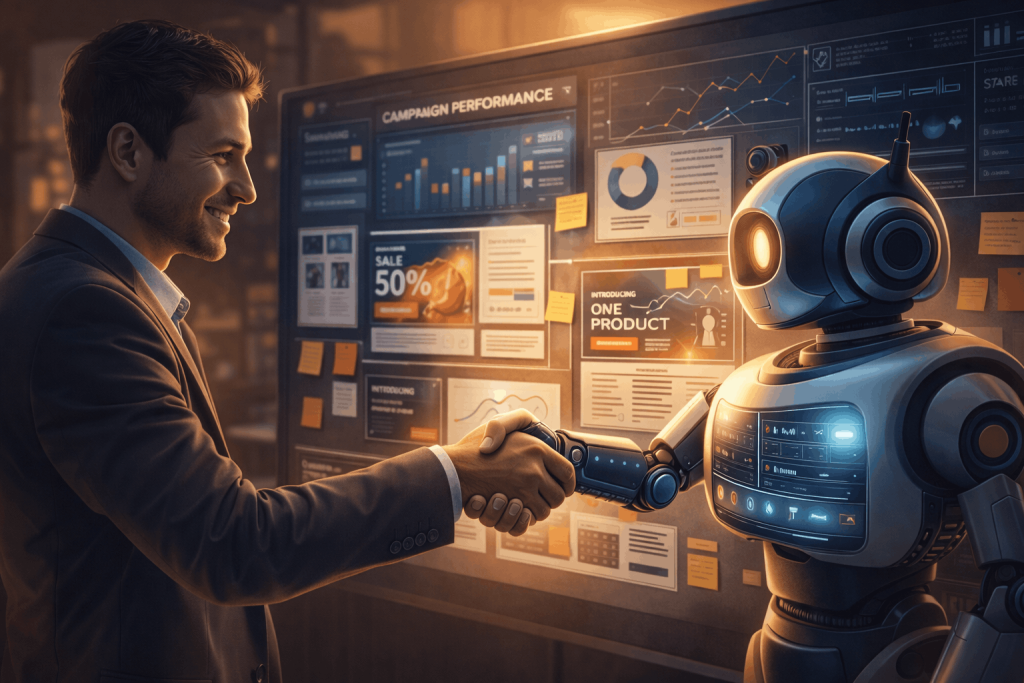
Invest in AI tools, but never completely ignore the power of offline connections. The future belongs to marketers who adapt, innovate, and combine the best of both worlds.
Pro Tip for Bloggers & AdSense Approval:
- Use visuals showing AI vs traditional marketing comparison
- Include tables, charts, or infographics
- Add at least 5–6 relevant images with proper alt text
- Keep paragraphs short and readable