Meta Description: Learn how AI-powered ad personalization works, why it improves conversions, and how businesses can use it to deliver targeted ads that boost engagement and revenue.
Introduction

Advertising has changed dramatically in recent years. Instead of showing the same ad to everyone, businesses now use artificial intelligence (AI) to tailor advertisements to each individual user. This strategy, known as AI ad personalization, allows brands to show the right message to the right person at the right time.
Modern consumers expect relevant content. They don’t want to see ads that have nothing to do with their interests. AI solves this problem by analyzing user behavior, preferences, browsing history, and interactions to deliver highly targeted ads. As a result, companies achieve higher engagement, better conversion rates, and improved customer satisfaction.
In this complete guide, you will learn how personalized ads work, why they are effective, and how to implement them successfully.
What Is AI Ad Personalization?
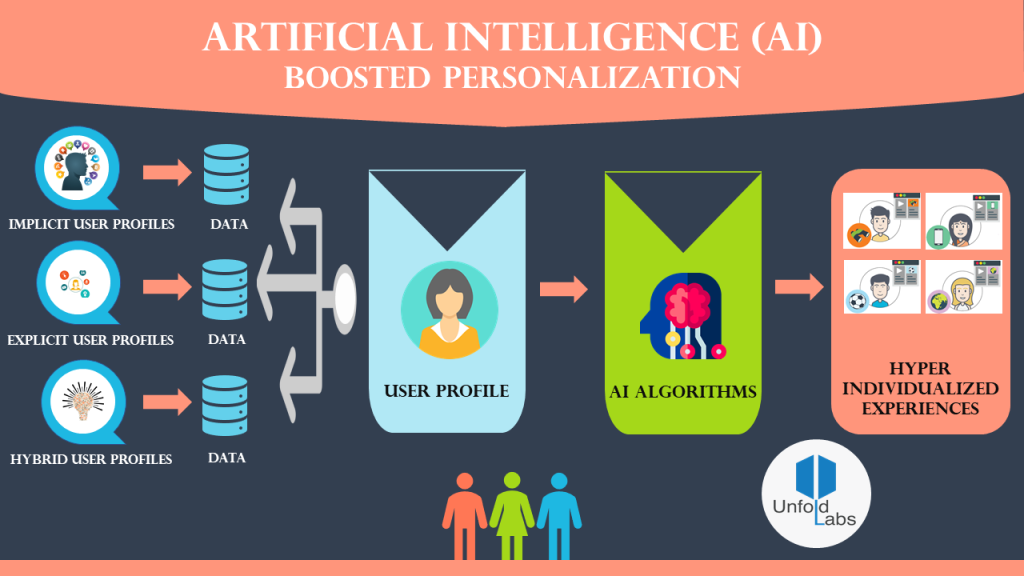
AI ad personalization is the process of using machine learning algorithms and data analysis to customize advertisements for individual users. Instead of relying on broad demographics, AI studies patterns such as:
- Search behavior
- Purchase history
- Website activity
- Device usage
- Location data
By understanding these signals, AI systems can predict what a person is most likely to click, watch, or buy.
For example, if someone frequently searches for fitness products, AI can automatically show ads related to workout gear, supplements, or gym memberships instead of unrelated products.
Why Personalized Ads Are More Effective
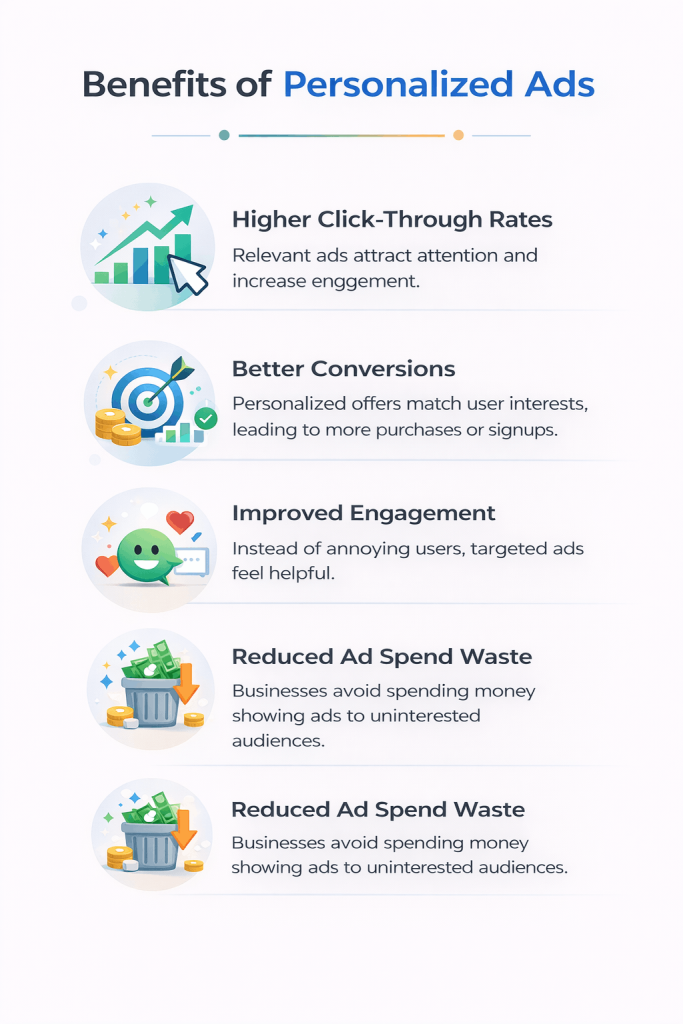
Personalized advertising works because it aligns with user intent. When people see ads relevant to their needs, they are more likely to interact with them.
Key Benefits
1. Higher Click-Through Rates
Relevant ads attract attention and increase engagement.
2. Better Conversion Rates
Personalized offers match user interests, leading to more purchases or signups.
3. Improved User Experience
Instead of annoying users, targeted ads feel helpful.
4. Reduced Ad Spend Waste
Businesses avoid spending money showing ads to uninterested audiences.
5. Stronger Customer Relationships
Relevant messaging builds trust and loyalty over time.
How AI Personalization Works
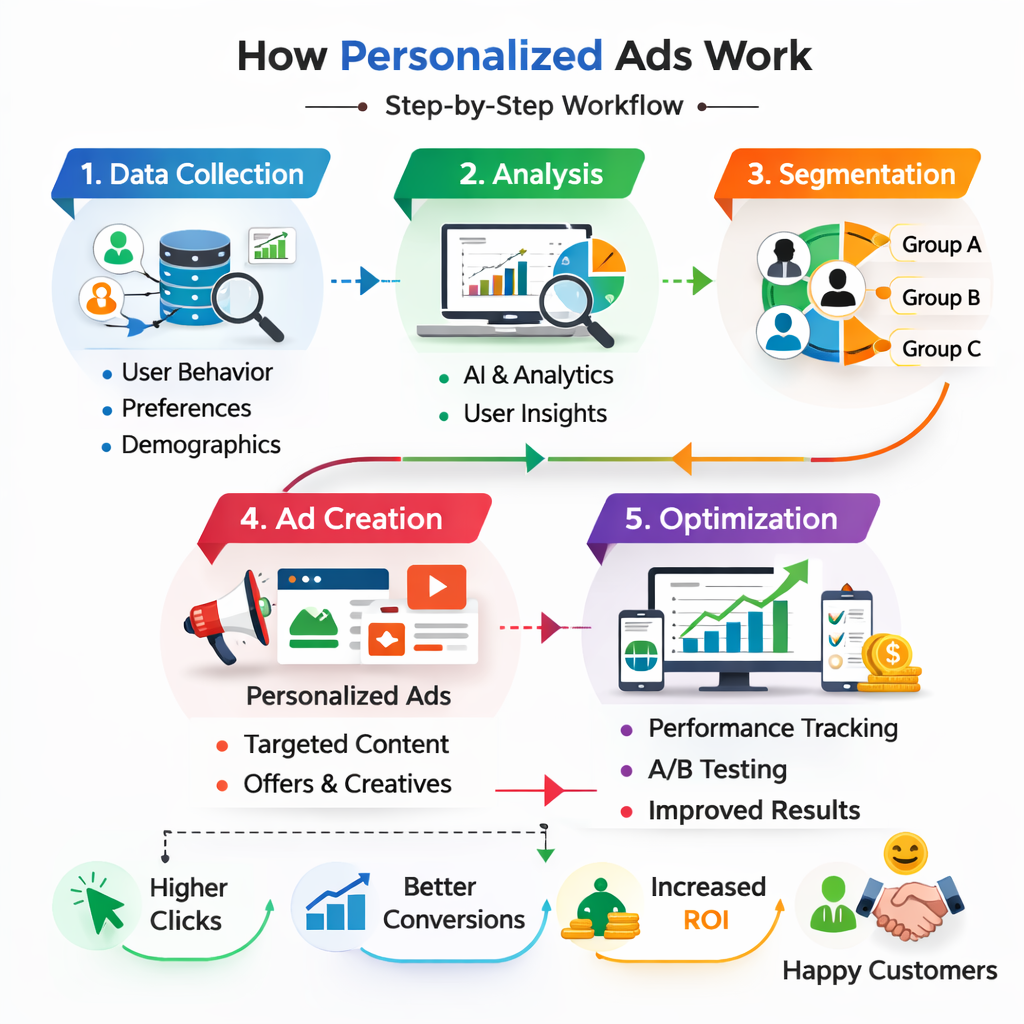
AI-powered ad personalization typically follows a structured process:
- Data Collection – AI gathers data from user activity, website interactions, and past purchases.
- Pattern Analysis – Algorithms analyze behavior trends and preferences.
- Audience Segmentation – Users are grouped based on interests and likelihood to convert.
- Ad Customization – AI generates ad content tailored to each segment.
- Real-Time Optimization – Campaigns are automatically adjusted based on performance.
This continuous cycle ensures ads improve over time without manual intervention.
Types of AI-Personalized Ads
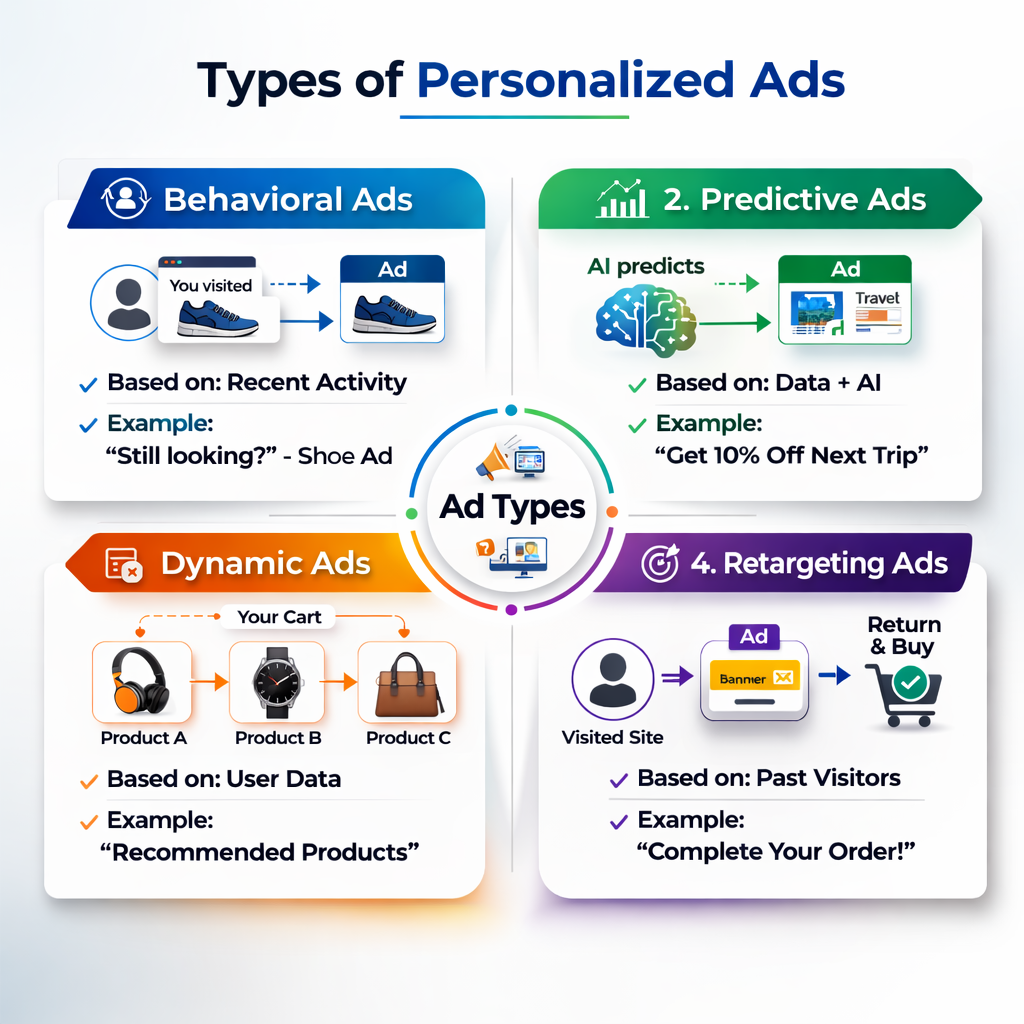
Different types of personalized advertising are used across digital platforms.
| Type | Description | Example |
|---|---|---|
| Behavioral Ads | Based on browsing activity | Showing shoes after visiting a fashion site |
| Predictive Ads | Based on future buying likelihood | Offering discounts to users likely to purchase |
| Dynamic Ads | Content changes automatically | Product ads displaying items user viewed |
| Location-Based Ads | Tailored by location | Restaurant promotions nearby |
| Retargeting Ads | Target past visitors | Showing products left in cart |
AI Tools Used for Ad Personalization
Businesses use various AI-powered platforms to personalize advertising campaigns. These tools help analyze customer data, automate targeting, and generate optimized creatives.
Common capabilities include:
- Audience segmentation
- Predictive analytics
- Automated bidding
- Dynamic creative optimization
- Real-time performance tracking
Even small businesses can now use AI marketing tools without needing advanced technical skills. Many platforms offer simple dashboards and automation features that make personalized advertising accessible to beginners.
Best Practices for Personalizing Ads with AI
To achieve the best results, marketers should follow proven strategies.
Use High-Quality Data
AI is only as effective as the data it receives. Accurate and updated information produces better targeting results.
Segment Your Audience
Instead of one large audience, divide users into smaller groups based on interests, behavior, or demographics.
Test Multiple Ad Variations
AI allows rapid testing of headlines, visuals, and calls-to-action. Keep testing to discover what performs best.
Respect User Privacy
Always follow data protection regulations and clearly inform users about data collection.
Monitor Performance Metrics
Track key metrics like CTR, conversion rate, and ROI to refine campaigns.
Challenges of AI Ad Personalization
While AI personalization offers many advantages, it also comes with challenges:
- Data privacy concerns
- Dependence on accurate tracking
- Initial setup complexity
- Learning curve for beginners
Businesses must balance personalization with ethical data use to maintain user trust.
AI Personalization vs Traditional Advertising
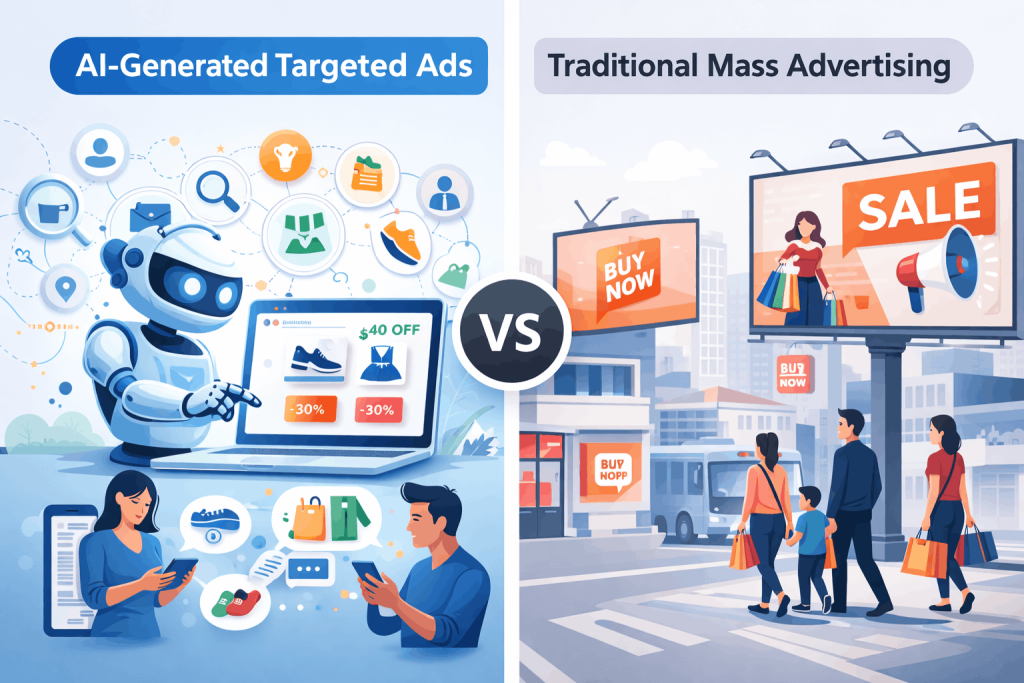
| Feature | AI Personalized Ads | Traditional Ads |
|---|---|---|
| Targeting | Highly precise | Broad audience |
| Optimization | Real-time | Manual adjustments |
| Relevance | High | Moderate |
| Cost Efficiency | High ROI | Can be expensive |
| Scalability | Easily scalable | Limited |
AI clearly provides a more efficient approach, especially for digital campaigns.
Future of Personalized Advertising
The future of advertising will rely even more on artificial intelligence. Upcoming innovations may include:
- Real-time emotion detection for ad targeting
- Voice-activated personalized ads
- Predictive shopping recommendations
- Hyper-personalized video ads
As AI evolves, advertisements will become more relevant, interactive, and helpful rather than disruptive.
Final Thoughts
AI-powered ad personalization is not just a trend — it’s the future of marketing. Businesses that use AI to tailor their advertising gain a strong competitive advantage by reaching audiences with messages that truly matter to them.
While traditional advertising still has its place, personalized AI ads deliver better engagement, higher conversions, and more efficient spending. By adopting AI tools, testing strategies, and respecting user privacy, businesses can create advertising campaigns that are both effective and customer-friendly.
In today’s digital world, success belongs to marketers who understand their audience — and AI makes that understanding faster, smarter, and more accurate than ever before.